Splicing materials
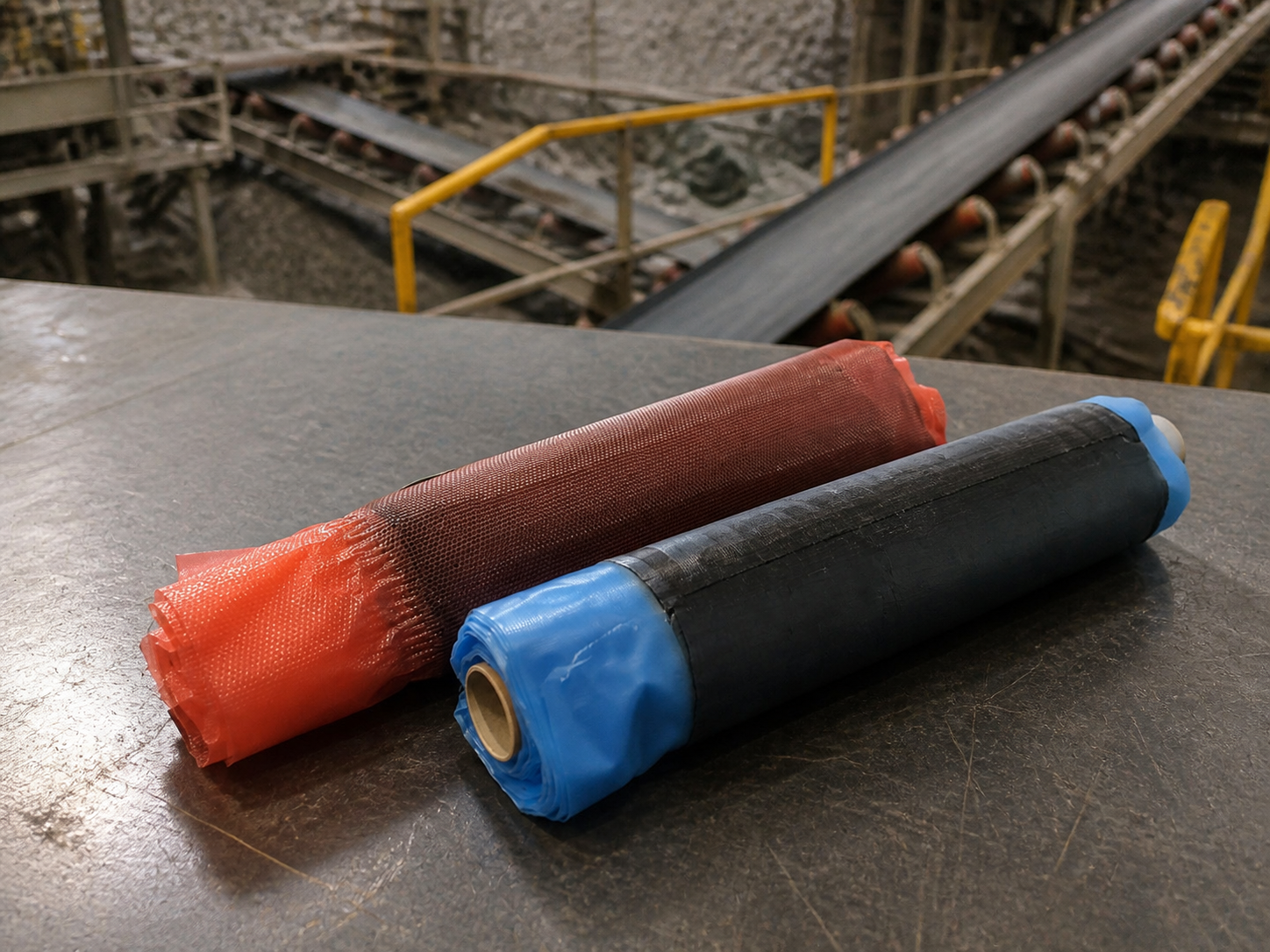
Uncured Cover Rubber for Conveyor Belt Splicing
Discuss cover rubber for a hot splice or cover repair as part of a matched material system.
Specify the cover layer you need to rebuild.
RUNNING supplies conveyor belt jointing raw materials. For uncured cover rubber enquiries, send the belt grade, repair or splice drawing and required sheet dimensions so the material scope can be confirmed before quotation.
Cover rubber restores the outer rubber layer in a suitable hot-splicing system. Tie gum serves a different role within the joint. Do not select either material by colour alone or assume that any rubber sheet is compatible with your belt.
Information for a material quotation
- Belt manufacturer, belt designation and cover compound or grade.
- Fabric or steel-cord construction and the approved splice or repair drawing.
- Required rubber thickness, width, length and quantity for each layer.
- Other materials in the system, including tie gum and splicing cement.
- Required processing specification and any product documentation required.
- Delivery suburb, Australian state and postcode, plus the intended use date.
Check compatibility and usable life
Ask for the proposed compound, batch identification, storage instructions and remaining shelf life with the quotation. Storage limits and curing conditions belong to the specific material system; we do not apply another manufacturer’s values to an unconfirmed product.
What should the order confirm?
Agree sheet dimensions, packing quantity, compatible application, documentation and delivery scope in writing. If your drawing calls for multiple layers, itemise each layer separately. A hot-splice material request should not be substituted with a cold-bonding product without technical review.
Common purchasing questions
Is cover rubber the same as tie gum?
No. They have different functions in the splice construction. Use the material positions shown on the approved drawing.
Can you quote from a photograph?
A photograph helps identify the application, but does not establish compound compatibility. Include the belt designation and material specification.
What if the old packaging is unreadable?
Provide the belt maker’s splice specification rather than guessing from appearance. We can then discuss what information is still needed.
Technical background: REMA TIP TOP hot-splicing material overview distinguishes cover rubber, tie gum and cement. This reference explains material roles; it is not a RUNNING product specification or an affiliation claim.